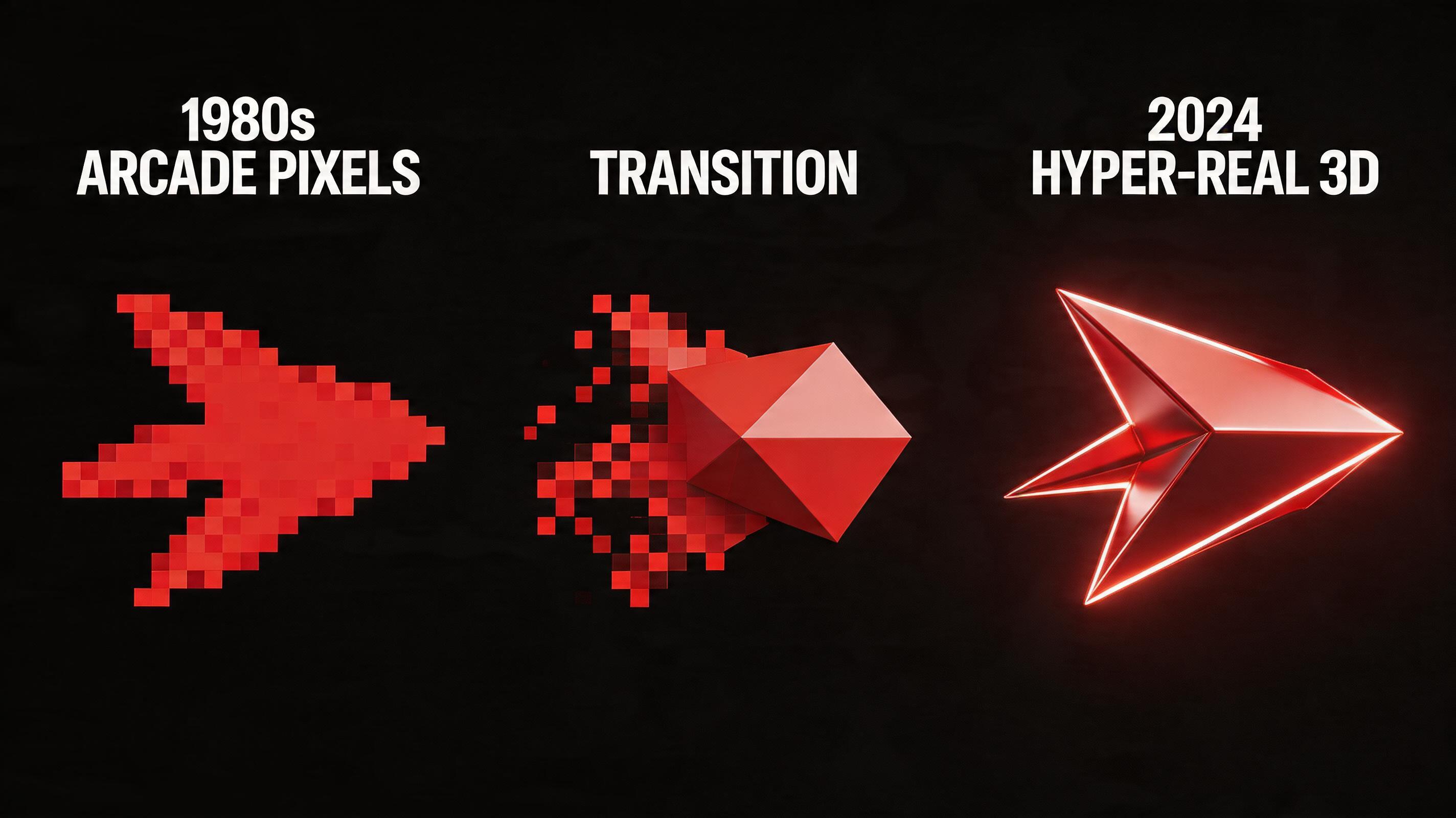
The landscape of browser-based gaming has undergone a seismic shift over the past decade. What was once viewed as a medium restricted to rudimentary time-killers and simplistic novelties has matured into a powerhouse of interactive entertainment. The catalyst for this monumental transformation was the mass adoption of HTML5, a suite of technologies that fundamentally redefined what a web browser could achieve. To understand the current state of web gaming, we must trace its evolution from the restrictive era of proprietary plugins to the boundless potential of open web standards.
The Dark Ages: The Reign and Fall of Flash
For a long time, the internet was not inherently designed for interactive multimedia. To play a game in a browser, users were forced to rely on third-party plugins, the most dominant of which was Adobe Flash. Flash was a revolutionary tool in its prime, democratizing game development and giving rise to iconic portals like Newgrounds and Miniclip. However, its dominance came with severe drawbacks. Flash was a closed, proprietary system notorious for catastrophic security vulnerabilities, massive battery drain on laptops, and a complete incompatibility with the emerging smartphone ecosystem.
When Apple famously decided not to support Flash on the iPhone in 2010, the writing was on the wall. The internet needed a native, standardized, and secure method to deliver complex multimedia. The deprecation of Flash was initially viewed by some as a crisis that would kill web gaming. In reality, it was the necessary destruction required to pave the way for a vastly superior architecture.
The HTML5 Revolution: Native Web Gaming
HTML5 emerged not just as a markup language, but as a comprehensive ecosystem comprising HTML, CSS3, and JavaScript APIs. The most critical component for gaming was the introduction of the <canvas> element, which allowed for dynamic, scriptable rendering of 2D shapes and bitmap images directly within the browser, requiring absolutely no plugins. Developers could suddenly write code that ran natively on any device equipped with a modern web browser—from a Windows PC to an Android tablet.
This cross-platform universality was a paradigm shift. However, early HTML5 games struggled to match the performance and visual flair of their Flash predecessors. JavaScript, as an interpreted language, faced performance bottlenecks when handling complex physics calculations or rendering thousands of sprites simultaneously. The web needed more horsepower.
Enter WebGL: Bringing 3D to the Browser
The true turning point in the evolution of HTML5 gaming was the standardization of WebGL (Web Graphics Library). WebGL provided a JavaScript API for rendering interactive 2D and 3D graphics within any compatible web browser without the use of plug-ins. Crucially, WebGL allowed the browser to communicate directly with the device's Graphics Processing Unit (GPU), hardware-accelerating the rendering process.
Suddenly, the browser was capable of rendering rich 3D environments, dynamic lighting, and complex particle systems. Frameworks like Three.js and Babylon.js abstracted the complex mathematics of WebGL, allowing developers to build immersive 3D worlds that rivaled early console games. The browser transitioned from a simple document viewer into a bona fide rendering engine.
Breaking the Speed Limit: WebAssembly (Wasm)
Despite the graphical leaps provided by WebGL, the logic and physics of web games were still constrained by the execution speed of JavaScript. Enter WebAssembly (Wasm), a binary instruction format designed as a portable compilation target for programming languages. WebAssembly allows developers to write the core logic of their games in high-performance languages like C++, Rust, or C#, and compile it into a binary format that runs in the browser at near-native speeds.
This breakthrough allowed major game engines like Unity and Unreal Engine to export massive, complex AAA-style games directly to the web. WebAssembly effectively eliminated the performance gap between native desktop applications and browser games, enabling the execution of massive multiplayer worlds and intricate simulation mechanics.
The Future is Now: WebGPU and Cloud Integration
As we look to the horizon, the evolution of HTML5 gaming shows no signs of slowing down. WebGPU is the next-generation graphics API, designed to replace WebGL by providing lower-level, more efficient access to modern GPU architectures (like Vulkan and DirectX 12). WebGPU will allow for unparalleled graphical fidelity, unlocking the potential for real-time ray tracing and complex compute shaders directly in a web page.
Furthermore, the integration of HTML5 with cloud gaming infrastructure means the browser is becoming the ultimate universal client. Heavy computational lifting is done on remote servers, while HTML5 handles the seamless streaming of the interactive video feed. From the humble beginnings of pixelated Flash games to the hyper-realistic, cross-platform marvels of today, the evolution of HTML5 gaming is a testament to the relentless innovation of the open web.